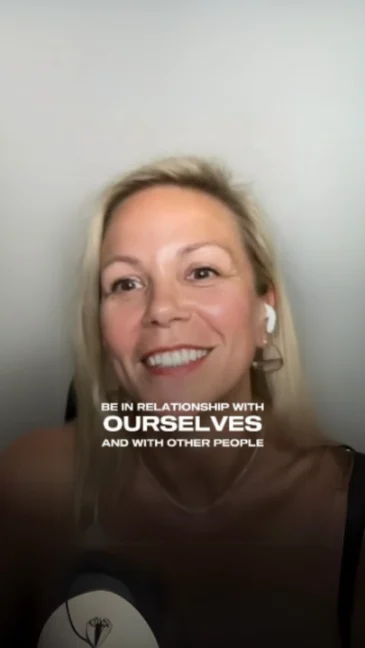
On season two of BUILDERS with Alex Snider, the podcast for leaders who want to build great companies, Alex and I talked about my book, Double Down on Your Genius, and why leadership requires understanding your relationship to yourself and to others.
🎧 Listen/Watch On:
Spotify | Apple Podcasts | YouTube
We talked about:
- Why coming into energetic alignment is required to achieve your dreams
- The vulnerability and wisdom to know when to call in objective support
- Why we all need GPS: Guidance, Perspective and Support
- The healing and integration required both in the individual and the business
- The self-awareness to recognize if you're derailing yourself at new learning edges
- Why slowing down is truly required to have the leverage to speed up
- Burnout isn't just from working really hard
- Growth is not a 'one and done', there are levels
LINKS
- Double Down on Your Genius
- BUILDERS with Alex Snider: Apple Podcasts | YouTube | alexsnider.com
Thanks for having me, Alex!
Read the full transcript
Alex Willo, thank you so, so, so much for being here with us all the way from Dubai, right?
Willo Yes, currently. I go to Thailand on Saturday, but I'm here for the next 24, 48 hours. Yeah.
Alex It's incredible. I love it. So, Willo, you've been called a lot of things. An oracle, an alchemist, a liberator, and a doula for hatching big ideas. I know you as an incredible international speaker, an animal-loving nomad like myself, and a well-regarded coach on rewiring, energy, mindset, and more. And you're about to add author to that list. I can't wait to dig into it all. Before we jump in, can you give a bit of introduction and background to expand on who you are and how you got here?
Willo Yeah. I've been an entrepreneur for over 20 years, the first 10 of which I had launched and co-founded several businesses, a few startups, a product line, had done a lot of different things. 10 years into it, I really realized I wanted to work on the deeper, heart-centered, transformational work and this inner work that comes with being an entrepreneur. And so that's what I got certified in, somatic coaching work. And the upcoming book is really based on this body of work that I've learned coaching visionary entrepreneurs over the last 10 years.
Alex Amazing. Well, thank you. I'm so excited to have you here. We have a lot of visionary entrepreneurs who join us. So I think this is going to be amazing. So you said you work with a lot of entrepreneurs, but your work is really grounded in spirituality. So how do these interplay from your experience and what's your perspective on entrepreneurship as a spiritual path?
Willo Yeah, I believe spiritual and personal growth is required. I feel like nobody is exempt from it on the entrepreneurial path, whether you like it or not. But I also believe it's really the foundation upon which sustainable and meaningful business is built. I mean, ultimately, entrepreneurship is relationships, right? It's all relationships. And that starts with your relationship with yourself, first and foremost. And then, of course, it's your clients, your team members, and then your relationship with time and money. That's multidimensional, right? So all of those things have required this ability to know yourself and have that perspective as you navigate the challenges.
Alex That's such a great perspective. I love how you said not just relationships with people, but actually with constructs like time and money. We can really struggle with those things just as much. And that's all that relationship with yourself and mindset. I think that's so interesting. And I can relate. I mean, time is absolutely something I think most of us can understand. The relationship is maybe a little fraught. And certainly how I see time and how I treat time has changed through my career, my own personal journey.
And I know something that comes up a lot, particularly for female entrepreneurs, actually money mindset. You know, like how we relate to money, the fact that, you know, we're only a generation or two out of women really not being allowed to even talk about money. To have agency around it.
Willo Absolutely. This is big, especially when it comes to power. And being a woman that can actually have that agency and that sovereignty and power, we are in the midst of a massive reclaiming in that realm. And this is precisely why I love to work with women entrepreneurs who are so heart-centered and empathetic and so brilliant. I'm like, no, we need power in your hands.
Alex Yeah. And there's such a coming back to that because I know as someone who came through the male business world and had a very male influenced way of working and operating to see this, I would call it a resurgence because I do think it has existed a long time ago of women operating in a way that really resonates and having power and not having to emulate a different way of being in order to be successful. How does that play into your work?
Willo Yeah. I mean, a beautiful way to take it out of it being like man versus woman is just really to look at it through the lens of masculine and feminine energy. And we can talk about everything through the lens of consensual, right? Because ultimately when we speak about power, that's the negative uses of power. The blatant misuse of power has been non-consensual and therefore has had this, you know, taking, raping, pillaging vibe that, you know, so many women, it can, I mean, not only have been victims of it, but also would never, ever want to be a part of, right?
I mean, not that there's not a massive deconditioning and unlearning that we're all having to do, but what I focus on in my work is coming into this loving union between that masculine and feminine. And you just brought up a really great point, right? I also feel like I can run a lot of masculine energy and my like get shit done. At the same time though, I have this really amazing softness and intuitiveness. And to me, I feel like it's just knowing how to have a union with those to, again, they're not fighting or one of them isn't completely ignored.
Alex That's so interesting. Yeah. It's something I, I didn't have the words for it for a lot of my career. And I ran, I would say very heavy on the masculine energy, but I think there was always a nuance to it that was really picked up on and really supported my success, which I didn't realize. I was just like, I'm doing the thing. I mean, I worked in, at times, all male teams. I'd be one woman in 50 plus people. That softness, I think, informed the, like you said, it balanced the masculine energy in a way that really supported my leadership and my growth in my corporate world and into startup life.
And then more recently, when I started having the words for it and understanding also your time in your office and your team versus your time at home. And I realized that running on my more masculine energy 24 hours a day was exhausting. I needed to find a way to have an environment at some point in my day and my week where I could be a softer version and I could let things go because otherwise I was running. It was like your switches on turbo constantly. And maybe it's an age thing, but I just got to the point where I was like, I cannot do this.
It's not sustainable. I'm not doing, I've made all these changes, but just energy. I was so, so, so drained for being in that, like, take care of everything and everyone in every realm.
Willo Yep. That's, and so much of my work is really coming back into alignment, looking at where things, what needs your attention, what's, what is out of alignment? Because ultimately if you are overworking or ignoring anything, you know, if you're pushing too hard or completely abandoning, it's going to be imbalanced, right? So we need to really come back into this alignment. And I think that we can't see it ourselves, right?
Alex Yeah. This sounds amazing. And I can imagine people are wondering, you know, how do we cultivate this? How do you help entrepreneurs navigate the challenge? And in the same vein, you know, you and I both know the value of support, right? Our, our role is supporting others and feed efficiency objectivity, but maybe while you're talking about how you support people, do we need a coach or are there some things that people can explore on their own? What's your experience been with that?
Willo Yeah. Well, so I always say in my work that I am guiding you to the wisdom of your own truth. I probably stand on the biggest soapbox for we need support. I, I strongly and firmly believe that we're not here to do it alone, but I also don't believe that there's one way and that you absolutely have to. In fact, a lot of this book that I'm writing is about putting these tools in your hands. I want people to have, it's almost emotional intelligence, right? When you have more emotional intelligence or awareness within, you're going to be that much more capable.
It doesn't mean you'll never need anyone ever, but if we can strengthen those muscles in you first, it's going to take you that much further. To me, it's insanely helpful to have a consultant or a coach to help us see what we cannot see, right? But at minimum, sometimes we just want someone to simply hold our hands through it, through what needs to be done when it feels like it's all just too much to carry on our own. And I think there's a real beauty in the vulnerability and the wisdom that comes from knowing when that is, not outsourcing your power because you have to or you should, but instead making it a conscious choice.
I know I'm going to be able to get further faster and it's just going to be more fun when I have somebody in it with me.
Alex Yes, that's almost exactly the way I frame it as well. I love that. So how are you helping entrepreneurs navigate some of the challenges that you talked about? What are the ways that you support people?
Willo Yeah, what I've seen time and time again, but you have as well, often the solutions to our challenges aren't what we think and therefore we end up wasting a lot of valuable time and energy, right? So my work and what I really love focusing on is looking at where we get caught up in these like survival strategies. We start avoiding by leaning on our coping mechanisms more, right? Pema Chödrön, I don't know if you know her, but she has a beautiful book that I always think of this title, Start Where You Are.
And she really speaks to this self-compassion that's required to stop and face where we are right now. And that is so much of my work. If somebody is sidelined maybe by the intensity of entrepreneurship or is navigating some challenges and there is that extending of your hand to help them through it, there's the first step is just being like, let's just be with where we are right now, right? Let's look at how did we get here? What's not working? And then we probably need to redefine what we want, right?
And then clarify those steps that we need to do to get back in the game, right? To keep moving forward. And like I said, we often just can't see this for ourselves. I always say we can't see the forest from the trees in our own experience. And this is why it's so helpful to have that. What I call in my work is the GPS, guidance, perspective, and support.
Alex Oh, I love that. Guidance, perspective, and support, GPS. All right. I'm going to write that one down. I love it. I wholeheartedly agree. And I love what you said for those listening. Understanding where you are is so important. And if you think about it, it's like saying, you know, if you were to look at a ledge and you want to get to a ledge, if you are not clear on where you are, let's say you think you're here and you're actually here and you build a ladder from here to the ledge, that ladder isn't getting you to the ledge, right?
It's a really simplified way to look at it. But if you are building out plans without a realistic understanding of where you are and what you have at your disposal in terms of resources, setting yourself up for at the very least frustration, if not failure. And so I, in my clients, I always coined it as a caring, objective challenge. It's often business. I say, you know, it's not my business. I really care about you and your business, but it's not my business. So I can see it in a way you can't.
And I can have the opportunity to challenge you, which will potentially be uncomfortable, but will really push you to get super clear and to answer some of the hard questions that our brains are tricky. It's not that we're intentionally avoiding those. Sometimes we aren't even hearing them because we're so good at just evading.
Willo Yeah. Masterful. Masterful about, yeah.
Alex So, I mean, I would love, I'm sure we would all love the idea, especially in today's world of quick fixes, right? One shot deal, take a pill, everything gets better. But I don't, I don't, I know from my experience, typically these things are not, and I think you would agree. So how can entrepreneurs ensure that they are continuously evolving and maybe evolving consciously and not plateauing? Because sometimes we can make a really big leap and it takes us a while to catch up to that leap.
And then it's just sort of.
Willo Yeah. I mean, again, if I stand on this soapbox and we all need support, I would say the other big one is doing the inner work. Doing the inner work is just vital. It's so vital for identifying thought and behavior patterns that may be derailing or stalling your progress because our comfort zones can lull us into this mediocrity for months and years if we're not careful. Not to plug another book on your episode, but.
Alex No worries. If you read it or listen to it, I did the audio book and it was phenomenal. It's narrated with a story the entire time and then the sort of research and interviews. And it was a really powerful reminder. And I loved how you said it. Our comfort zones can drag us into mediocrity. And it is, it's true. You know, in the moment I watched that book for someone who best like pretty heavily in my growth, I was like, yeah, actually. And it was amazing because I read it and the story is about a truck in Alaska, like survival hunting type thing.
And I listened to it the week before I was at Burning Man. And then I ended up trekking out of Burning Man. And I had this in the back of my head of like, this is how I remind myself I can do hard things. And by doing this hard physical thing, I will be equipped. And I'm not going to lie, the last three weeks since then, I have like, things have soared in all.
Willo Amazing. You're totally hitting on it, which is once those neural pathways have formed deep grooves in our habits and our beliefs, it can be so hard to shift out of. I mean, this is what you experienced really was like this, you know, date shift. And this is why I think it's so powerful to work with a coach, even a personal trainer. I know, you know, as somebody who trains, it helps us see that we are more capable than we know. It helps us get out of those limiting, like, I can't do it, or even I don't want to do it, right?
All these stories that we make up. And a lot of this, you know, comes back down to identity, you know, making sure that you aren't giving up on what you know is possible, who you know it's possible for you to be. And I mean, this is why it's insanely helpful to be surrounded by others who move differently or who have experienced where you are, share the same values, and who then now have the life and outcomes that you desire.
Alex Yeah, I talk about this all the time, you know, we know it's our evolutionary trend is to want to fit in. So if you know who you want to be, then you need to surround yourself with people that who you want to be will fit in with. Otherwise, you're fighting the tide, you're, you know.
Willo Yeah, I think it was, I think it was someone in our network, it might have been a meal that said, you know, if you want to be a six pack with a millionaire, surround yourself with, sorry, if you want to be a millionaire with a six pack, surround yourself with millionaires of six packs. It'll be a lot easier to get there if that is who you are observing and interacting with on a regular basis.
Alex And I love sports analogies and fitness and what you said, you know, for those listening, I always like to try and give different ways of understanding this. So I worked with a trainer to come out of a long stint of being struggling with injury. And I know a lot about fitness and I've done personal training courses, but I worked with somebody to help guide me objectively, to help create a bit of safety as I started doing exercises that potentially were putting my injury at risk that were a little heavier.
And it gave me that confidence that someone else was looking and would stop me if I was doing something too fast or too hard, be there to catch literally in this instance, you know, spot me, support me, catch me, help me do that. And I think fitness is a really nice one because even in there in fitness, people often be like, oh, I worked with a trainer for this, but then I should be fine forever. Maybe, but maybe at some point you want to learn a different, you know, maybe you want to go from bodybuilding to powerlifting, or maybe you want to train for a triathlon and like, that's a new skill.
So like, that would be a time you might bring someone in or, you know, maybe you're fine for a while. And then you're like, actually, like, I'm really comfortable where I am and I'd love to hit a new PR. So maybe I'm going to train with a coach for three months, or maybe I want to do a bodybuilding competition. And now I need more support on how to like, intentionally change my physique rather than just like, get strong and healthy.
Willo I mean, ultimately, it's, it's all connected, because really what we're talking about here, and this is really the epicenter of the trifecta that I offer in my book in terms of coming into alignment, the goal, especially as leaders is embodied leadership. And this is precisely what it is. It's not getting in our own way. It's knowing how to navigate those challenges, come back into alignment, not only not limiting yourself, but having enough self-awareness that you're also able to lead others, you know, because like I always say, like gone are the days of the old sort of very like drill sergeant management.
And I loved your post I saw today, I think it was about management versus leadership. And it's exactly that is, yeah, there's management and what needs to get done. But there's also being a leader and holy cow, like what is required to be a good leader these days is requiring this massive self-awareness and emotional maturity like never before.
Alex Yeah. And command, I always say command and control is out,
Willo Like, and when the power with, as Brene Brown says, she's like, instead of power over, it's power with.
Alex Yeah, exactly. And I think there's, which, you know, if you haven't been through startup world, this, this probably is so relatable, but you know, if you, when you first start a startup, you're usually like a couple people, maybe three or four, if you're really lucky. And there is an element of just the barking orders because you're co-creating, you're all there. There, there is a level of internally, you can just like get it done. Right. And externally, you need a little more finesse to sell your idea, but you can get it done.
But the second you start bringing people in who were not part of the Genesis of that idea, you need to figure out those intrinsic motivators. You need to enable you and you all like all the good things that I write about constantly that you talk about in leadership. I won't belabor it, but I'm wondering, you know, without obviously betraying any client confidence is, can you give a few examples of some of the shift that can happen and what the awareness that is needed for those shifts to happen?
Willo Yes. I, I can share, I mean, one off the top of my head that is specifically a client. She's worked with me off and on for the last year or so. She has a seven figure business and she came to me knowing she needed to do some inner work in order for her to get to the next level. And the work that we have done together and her, this self-awareness that has switched on, I would say, you know, she came to me and one of the sentiments that she shares, which I have a video of this actually up on my Instagram where she's sharing it, which is that she found herself 10 years into her business and she loves her business, but also was feeling burnout, like not really loving it.
Like something was crunchy going on. And I mean, don't I know it, I've been in several different businesses and it's been 20 years. And so, yeah, sometimes we get like not disconnected from that, but that, that whole out of alignment and needing to have somebody help us see what we cannot see. So, so much of the work that we did, I mean, ultimately she'll say, which I really love, she reflected is that it was so powerful for her to understand what it meant for her to be resourced as a leader.
And that ultimately because she has built this business and she has been the person who's gotten where it is today, it can be so easy then to keep yourself in the bottleneck of your own business's growth, right? I know you probably know this so, so well. So it was just such a powerful testament to how she really flipped it around and not only started putting herself first physically, but then, you know, all the things that need to get implemented for that within her team in order to take herself out of these places where she's still being the glue, right?
But then also what else gets to emerge? What then gets to actually emerging? Ultimately, when you're still stuck in the weeds of your business, certainly a seven figure business that's literally like doubling and tripling. There is so much, your, your time and your energy needs to be put in different places, right? That, that only your leadership can, can lead. Only the doors that your leadership and your experience can open. I love that question of like, what else could emerge when you've got all that stuff taken care of?
And instead you get to be the powerful leader and creator that you're here to be.
Alex Love that. So, you know, you were just talking about how rapidly things can grow. You know, sometimes your business is doubling, tripling. I hear like 10x mentality a lot out there, which, you know, pros and cons. Right. Well, of course, not everyone is going to be the next unicorn or really wants to be. Growth is a typically a key metric of business, right? If you're not growing, you're, you're shrinking. So how do you suggest entrepreneurs handle rapid growth and scaling? You know, obviously not looking to give all the trade secrets away, but what are some things that people can do just to support themselves and, and be, like you said, have that self-awareness?
Willo Yeah. Well, I mean, ultimately, we're not robots, right? We need time. And it's what I call healing and integration, time for healing and integration. And really any time that we are expanding, which is growth, right? So if we even look at it through this lens of anytime you're implementing, anytime you're actually creating, you know, growing, building, that's this growth time, but then something expands, whether that be your bottom line or your team or your amount of clients you're serving, whatever that looks like. And so we need that time for integration and sometimes healing because yes, energetically and emotionally, but also to potentially re-solidify that foundation that may have quaked and cracked and needs reinforcement.
So that might be new systems or new team members or a reset of expectations, even on yourself and what you can do, right? Or what other people can do. But when things shift, you can't keep operating it the way that it used to. And you need a little downtime to stand back and say, okay, what needs to get healed or integrated energetically, emotionally, or actually tangibly in the business?
Alex I love that. I love the buckets as well. I think it's helpful to know that there are buckets that can help us see things in a more manageable way rather than just like all of the things.
Willo Yeah. I'm such a, this is what my whole trifecta is about is actually giving you a map. That's why I call it the GPS as well, because as entrepreneurs, we need a different GPS, right? It's not these standard paved roads and you know, where there's light fixtures and it's all dialed in. Ours are like landmines and detours and all these different things. So yeah.
Alex I love it. Our roads are Tulum roads, not Cancun. Yeah. Reference for anyone who's been to this area of the world. I'm sure there's an equivalent, you know, in a lot of other areas.
Willo Bali.
Alex So I was just going to say, anytime I've spent in South East Asia, it's very similar.
Willo Oh yeah. I've definitely wound up with my GPS and been like, there is no road. And then all of a sudden been like, oh, there's slightly less grass here. And there's some rocks underneath. And it's about this angle, but like, okay, here we go.
Alex Yeah. It's crazy. Amazing. I love it.
Willo Talk about nervous system. So much of this comes back to, you know, when we're talking about the, even the physical fitness, right. And mind over matter. So much of this is what is the capacity that your nervous system is regulated to. It has the capacity for, in the sense of when it gets intense. This is another one when it comes to rapid growth is making sure that you have the self-awareness to ensure that you're not inadvertently derailing yourself or sabotaging yourself every time that new learning edge is encountered.
Because sometimes we'll hit that, oh my God. And it's, and it's so normal, but there's ways to ensure that it's not as extreme or at best to shorten the recovery time. So even if you do hit this learning edge and it freaks you out energetically, emotionally, or something on your team goes haywire that we're able to shorten that recovery time.
Alex I love that. And I think the nervous system is being talked about more these days. I think that we probably can't talk enough about it. I'm a big believer in tangible, intangible, and absolutely having the balance, but my own experience of understanding that and understanding what the shifts are, it is wild, right? Like if you think about a car running on like 5,000 RPM, like you will burn it out. Like, and you have no acceleration, right? That's why we change gears in cars is to get acceleration.
And if you're already at the max RPMs, you can't accelerate. Like literally, you can't. You can hit the gas as you want. You're not. And if there's no more up gear, then you can't drop your RPMs. You're just, and I think-
Willo Which, I mean, is such a powerful testament to like how, when I say this all the time too, I'm sure you probably do in some way, shape or form, slowing down is required for speeding up, right? It's like, we have to, and that's exactly what we're talking about with that leverage of the gears is if you are on full force go, you have actually no leverage there. You have nothing that you can shift, not the least of which is that, you know, from a relationships point of view with whoever you're serving or your team, that there's this expectation that you're working in these realms of black and white when actually life is needing to actually know how to navigate all the, all the grays in between.
Alex Yeah. And this is where I think coaching is, is probably really helpful, especially if you have been running that kind of case for so long, the recognition of what the different states actually feel like. I think it's something that with the pace we run at, technology, which is such a nice numbing tool, pros and cons, like, right? Like everything has a use, but I think it can be hard to recognize. I recognized when I came out, made one of the big transitions in my life and career journey that I needed some transitions and I had some support through that.
But I still honestly just didn't have the level of self-awareness to really be able to know what the different gears were. But I remember, and it popped into my head because of the Bali story, one of the first times I was living in Bali, I had been probably about eight months out of corporate life. And I was on the back of a Gojek for anyone who's not like familiar with Southeast Asia. Taxis are not just cars. You can get a taxi on a motorcycle, which is great because you can navigate traffic a lot easier.
And I was on the back of a Gojek and I was on my way somewhere and my Gojek almost had an accident, a pretty bad one. Thankfully we didn't, but it was like a real close call. And my nervous system just went through the roof, right? Like I thought I was seriously injured. And I had this rush of sympathetic nervous system, right? Your fight or flight. I had a level of like anger, which I didn't know how to express. So I didn't say anything, which is a whole other conversation.
But I had this rush of anger. I had felt like, you know, all of these things. And this is in a split second. And in that moment, I realized that I had indeed done a lot of work to come down. And the anger was actually at how familiar this feeling was because I used to live feeling that way all the time.
Willo Wow.
Alex And it was such a powerful moment of because I'd been doing all this work and I still was, I was still struggling. I was still having a lot of things. I was still figuring out I was still overworking, but it was, I needed that contrast of that moment to be like, I used to feel this way, if not 24 hours a day, at least a majority of the hours in the day. And my anger was not in my driver, although I was frustrated. It was this moment of like, intense, like, oh my God, I used to feel this way all the time.
Like I remember I wanted to cry. It was really intense. And I think that was one of the first times where I really understood just how big of a range we actually can experience. And, and, you know, that was probably five years ago, at least starting to actually be able to understand and be more aware and therefore more intentional with like managing that.
Willo Yeah. Wow. Well, and I am a huge fan of this. This is like the training that I received as a somatic coach is really having this awareness of the, these, the fear moves, you know, that are often how we respond to triggers and how that shows up in your body to have awareness of it. So that if you are triggered in a client situation or in a, you know, somebody on your team or with your partner or what have you that you can really now in the moment, I mean, it's, it's total ninja level.
If in the moment you can actually navigate it, but at minimum, the more body awareness you have that, and this is something that I work with all my clients is because every single experience we have just like that, you get to then reverse engineer and go, that's what that feels like right now. I'm out. So if you have that again and you can even name it, right? Like how it's feeling in your body and noticing then also how it shuts you down. So yeah, I, I mean, I could talk about this stuff all day.
I think it's so powerful because we usually do a series of these fear moves, right? If it's like that fight, but then you shut down. So then there's a little bit of a flee, like I can't even talk about this or a faint where you all of a sudden feel really tired. So yeah, love, love the topic of all those things. Cause it's so key for, especially when we're in leadership, right? We're not just isolated. We have to actually be in relationship with ourselves and with other people.
Alex Exactly. Yeah. And I think, you know, it's like you said, if that awareness, of course, you know, we want to expand our time between stimulus and reaction and be able to be ninjas. And, but the more you understand it, the faster you can recover. And also the more intentional, right? Like if I said to you, you are going to live the next six months feeling like you're about to be in a car accident, that level of stress, would you choose that? Would you, even if you don't know a lot, you would probably know that that's exhausting, that that's not sustainable.
But until we can have that perspective, I think a lot of us just exist until we don't.
Willo Yeah. And when you don't have the awareness, what happens is it comes out sideways. And we're judging ourselves or blaming others and it's tangled. And so that's a lot of the work I do is on this, these very tangled emotions and tangled responses because it's coming out sideways because we can't see it clearly. But when we can clear it all up and clean it all up and then be like so powerfully intentional in the way that we are behaving and responding. I mean, we're not going to be perfect till the day we die.
Genuinely, this is what we're here for, but we can absolutely make great strides in improving that then make a difference for everybody who we come into contact with.
Alex I love that. And I think it's such a good reminder is again, until you do the work, you'd actually don't even know where all of the, all the impacts are.
Willo Well, and I would also even add until you even get to the next level, right? Because that's, I mean, that's actually precisely, again, right? The spiritual and personal growth journey that we're on because every single new level, every single new level of growth or what have you is going to present you with some new opportunities to practice flexing these muscles that you've been working on.
Alex It's awesome. So we were talking about how this isn't sustainable. I know I've, I've hit walls a few times in my development. And while I don't think burnout is a new concept, it's definitely something that has a more recognizable name, is getting a lot of attention these days. I'm seeing it in so many emails, articles, LinkedIn title, coaching specifically for this. And I would say probably at this point, it's the minority of people I know that have not experienced some form of burnout, which is scary to think about.
What advice do you have for entrepreneurs facing burnout? Because it is very real. It, for those of us who are quote unquote fortunate, it happens as we exit and we can take some time and figure ourselves out. But I think for most, there's at least elements of it that happen in a time where it's a little more difficult to just hit pause and hit the beach.
Willo Yeah. 100%. Yeah. I mean, the, we can't, we'd be remiss if we didn't mention just capitalism, right? There's just a massive inequality of wealth and erosion of the health of our people and playing it right now. And I also want to address that burnout isn't just from working really hard. I mean, that's a huge part of it, right? And no matter even if you're just so aligned and you're loving it and you're lit up and you're obsessively doing it, which I love, right? We, it can be so addictive actually.
But I also believe that collectively we are experiencing just a massive emotional burnout as well. So, you know, ultimately in a lot of my work, right, is we need to look at where there's a misalignment somewhere. How are we getting in our own way? Or the other side of that same coin is how do we need to be supporting ourselves? And again, if we look at this through the lens of, we only know what we know and we will always gravitate towards what we know. Sometimes we can't see possibilities for how that might shift.
Certainly also, if you are in this massively constricted place, you know, usually when you are in any burnout, again, you're not resourced. So you cannot see it. You're like this because you're just crushed under the pressure of whatever that burnout is. So this is the big thing. And I think that the last couple of years has shown us anything, right, that we need to find a way to prioritize support, not isolating, but making sure that you're getting into nature, laughing, playing, not taking things so seriously.
It's very counterintuitive when actually it's feeling like the world needs us to be taking shit pretty seriously. But this is the delicate balance of being a human who cares, right? Because everything is going to feel so intense and so hard. And yeah, not all of us have the luxury of like going to Bali and, you know, what have you. But I do believe that this is this is the big shift that we're seeing, right? That like no matter who you are, where you are, what do you need to reclaim for you?
And what do you need to stop doing? Maybe where are you over giving or maybe where maybe where you need to set boundaries or where you need to reclaim anything for yourself to bring yourself some more joy? This was my huge priority last spring, about a year and a half ago was my like biggest priority to I just was like, I have got to prioritize my joy and aliveness. I had hit a massive time of I mean, I wouldn't even call it burnout. I feel like it was like a death.
Many people in my life died. Many things were just dying metaphorically and physically. And I was like, I have got to just my whole like I am not going to be good for anybody until I find my way back to my joy and my aliveness. And it's not easy. Oh, my God. Are you kidding me? And yeah, your income will probably suffer. Relationships might suffer, you know, and it doesn't always seem like it's an option, but ultimately you have to find a way because we need you to find a way.
Otherwise, you're not going to be good for anybody, including yourself.
Alex I think there are a few things you said there I want to just highlight for, you know, if you're listening to this entrepreneurship tends to be a little bit of a lone wolf. Right. And I think that I think it's a misnomer because what we don't see behind the scenes, right, like even these people who rise to the top and have these very particular personalities that maybe don't align with what you and I are talking about as good leaders. There is someone. This is why they bring in people to run their operations, who are people, people who can be their chief of staff or their operator or.
Right. So I want to remind you if you are earlier on or not even in entrepreneurship, but considering it, this a lot of the stars, the unicorns you see, you're seeing the tip of the iceberg. You're seeing somebody who is maybe very unique and very bright, but did not get their company off the ground by themselves without, you know, being good at people being in touch with themselves. Right. They are. They're the outliers. And actually most successful people you may never hear about are people who go through these journeys.
And the overgiving is the other thing. Right. I just came back from an event and I was with all kinds of hyper successful people. And it was a real good reminder. They are all so giving. And I think that is amazing. And most of them have been through some very, very, very hard times. You know, the depths of the depth and we can overgive. Right. And so when you combine the fact that we think entrepreneurship is this lone wolf thing and it can feel really isolating and a lot of us are overgivers, a recipe for disaster.
And I know for myself, there have been these layers or levels of learning to look for support, learning to ask for support, learning to accept support, receive support.
Willo Yeah.
Alex And I, you know, it has literally changed my life. Right. So from just looking for someone to give me some objective challenge and space when I was looking to leave corporate and make some decisions, which was like leave partner track without a job. I was like, I just want someone to help me think this through and make sure that I have opportunity all the way to I've just exited my startup. I have been working myself to death during the pandemic. I am an athlete in my identity.
You talked about identity earlier. Yet for the last year, I have barely been able to train due to both time and physical pain. So I don't feel at home in my body and getting initially and I bring this up so people can see the levels. You know, I moved back to Toronto to deal with post merger integration. You literally couldn't get a trainer because of the pandemic restrictions. So I made an accountability buddy agreement with a friend of mine who was in a similar situation. And we did that for about a month and a half until until training opened up.
And then I got a personal trainer and that meant I was paying someone a lot of money, especially in Canada. It works much more expensive than here. And I had appointments in my calendar and I showed up to them and I never didn't show up to them because, oh, let me sit with my co-founder and go through the finances with him because that's really important. It is important, but it was going to happen before or after that appointment. And in the past, it always would have been like, oh, we'll just go to the gym an hour later.
But actually it ended up being three hours later and now it's closed and now I'm just tired. And then so without, you know, boring anybody, I just want to give some different levels of example. And then obviously, you know, therapists, coaches like yourself and more of the energy and spiritual side, really direct targeted support, bringing people in who are amazing at something. The resourcing one resonates with me. I read an article. I want to say it was probably by McKinsey or right around the time I left corporate.
And it was the first time I'd heard under-resourced link to burnout. And it made so much sense to me. And I actually think it was the first time I realized that that's what I was experiencing.
Willo Yeah. Yeah. Having that accountability and support, to me, I'm just a huge fan. I mean, just same with you. Like I, one of my businesses and what the first 10 years of my business, it was like my bootcamp kicked my ass in learning how to ask for support. It was a business that I, I could not do alone. And it was like jokes on me because you got to learn, you got to learn how, and it's going to be vulnerable AF. It's going to be going to make you see all your weaknesses that you didn't want to look at that are real convenient.
You know, you don't have to look at those when you're being lone wolf, but it will, it will show you as soon as you have a team or have to call in support, let alone then graciously receive that support and let go of that control. I mean, there's so many aspects that are massive lessons. So that's beautiful. I love that.
Alex Yeah. I think wherever, you know, you are, if you're listening to this, there's different areas because I knew how to run a team. I'd run multimillion dollar projects and huge teams. And yet, you know, I didn't know how to ask for support in other areas that were holding me back or, or, or weighing me down. So I think he's, this also not, again, not a one and done on the theme. So we can't gloss over the fact that you're writing a book. You're about to publish your book.
That's so amazing. Tell us about the book. What prompted you to write it?
Willo Yeah. Well, this book, the actual idea came to me in like 2016 and I started writing it in 2018. And then it got shelved in a big messy pile in 2019. And fast forward, I mean, truly unbeknownst to me that this would be how last year went, but I went on that path, right? Like I said, I've just really needed to come back into my aliveness and, and realign, which I had created this entire alignment trifecta in 2021. And so it's, I had all the tools, but man, we need space, right?
To, to do that integration, that healing and integration. That's exactly what I set out to do. And basically found myself back in Thailand. Finally, after so many years, you know, through the pandemic was able to get back to my beloved Thailand. And I was like, you know what? I think now is the time. And I ended up starting writing it from scratch and wrote it in six weeks. I had some help. I did not do it on my own. Thank God for my book writing coach.
And, but I, I rocked it out in six weeks and it's now of course taken the full last year of massive structural edit and rewrites and line edits, which I'm just now in the tail end of, and it's going to probably be published next month, which is so exciting.
Alex Amazing. Do you think that books reach people in a way that the other arenas of your work, coaching, speaking? Don't.
Willo Yeah. I'm excited because I mean, similar to you, right? I've been a high level, high paid coach for a long time. I have tons of free stuff out there, but in terms of me literally opening up my entire model and everything. And that's really, I mean, I can't put everything in there. Believe you me, I tried. Ask my editor. But I.
Alex Editors are just there with the pruning.
Willo Oh my God. Killing my darlings left and right. But ultimately the whole thing is like, oh my God, I get to put this in the hands of so many people. And that is so beautiful. I mean, we do the work that we do to help change lives and help support people. That's my mission, especially when it comes to this very poignant piece of it, which is navigating the inner work as an entrepreneur, especially as a woman and navigating power and really being able to step into that.
So the title of the book is Double Down on Your Genius. And the tagline really describes what the book is, which actually follows the trifecta really well as well, which is own your gifts, align your actions and flourish in your calling.
Alex I love it. So we will make sure when we publish this as a podcast that we have all the info on where to find the book because it is going to be out next month, not out yet. Before we wrap up, I have a few questions I like to ask just for people to get to know you outside of what you do, which, you know, for a lot of us is all consuming passion, but there is, there are other layers too.
Willo There are. Yeah.
Alex So they're pretty rapid fire. You can always pass if nothing's coming to mind. So the first one is, is there an experience that changed your life from being you went through?
Willo Yeah. I mean, I would say hands down the biggest life trajectory changer for me was when I moved to Southeast Asia in 2014 and just basically started living life as an expat. So that's been almost nine years now and lived in Hong Kong, had quite the spiritual awakening in Hong Kong of all places. It's where I chose to stop drinking, stop doing any recreational drugs and really set me on a new level. I've always been very, very spiritual for a long time, but I set me on a whole new level, which I'm so grateful for.
And it was also, I talk about this in my book, it was quite intense as well. But yeah, that, that just setting me on the new path of living as an expat. And I mean, talk about even learning how to your relationship with time and, and all of that.
Alex So powerful.
Willo Yeah, exactly. Across the world, halfway around the world.
Alex Exactly. Yeah. Amazing. Is there a book that
Willo You read at some point that really changed your perspective on either a particular area or on the
Alex Bigger picture?
Willo So many, so many books. I have this on my website, like all my recommended books. And you know, it's funny because I would normally say this one, which I'll say both of them, but what flashed in my mind, and I really trust this is I started reading Shakti Gawain way back when, I mean, when I was probably 18 or 19 and she wrote a book called Creative Visualization. She wrote a lot of books, but one of them was Creative Visualization. And I think that that is, it's still such a huge foundation of the work that I use today, right?
Which is like, how do you want to envision your life, right? How can you actually really put that energy into the vision that you want to create and consciously create your life with that vision? And then I'll just also add my, my mentor, I was trained by the Hendricks. So Gay and Katie Hendricks, and they've written a lot of amazing books, but the number one book, and I'm a certified big leap coach is Gay Hendricks, The Big Leap.
Alex Love that book so much. Most people I know that book has come into their life at the right time, and myself included. I was like, I can't believe I never read this sooner. And then I was like, no, I read this right when I needed it. So, so good. I love that. The last question I have for you, if you could go to any concert tomorrow, touring or not, dead or alive, what would it be?
Willo Well, I want to see Lizzo so bad live. I love, love, love Lizzo, but I really love the idea that I could just mash this up and, or maybe have, you know, an opener. I can have both of them in the same show and I would 100% love, and I really wish I got to see Prince live. So I would have it be like Prince Lizzo concert. Who's coming with me?
Alex All right. That was a very, I love that answer. I love that. Willo, it has been an absolute pleasure having you. We've gone deep. You like, I never know what I'm going to share on these things. So it brought up and I think probably the same for a lot listening. So thank you so much for coming on, for sharing. You just saw this amazing light about you from the first time I met you, which I normally start with, but was in a cafe nomading. Yeah. And then we realized we had all these interconnections in our networks and our stories.
So thank you for being here. If people want to reach you to continue the conversation or understand a little more specifically about what you offer, what's the best way to get in touch?
Willo Yeah. So I'm WilloLovesYou on everything. And the book, there is a sign up and hear about all the launch stuff that is at WilloLovesYou.com/book. And you can find that link in my bio as well. So WilloLovesYou on every platform, WilloLovesYou.com.
Alex Such a great name or domain to have. I love it. Thank you, Willo. It's been wonderful. Thank you to everyone who joined us and so excited to talk to you soon.